

Brigitte Bardot: Remembering the Icon Who Chose Animals Over Stardom
The End of an Era
The world woke up to heartbreaking news on December 28, 2025. Brigitte Bardot, the French goddess who redefined beauty and femininity in cinema, passed away at her beloved home in Saint-Tropez at the age of 91.
But here’s what makes her story extraordinary: this wasn’t just another celebrity obituary. This was the farewell to a woman who walked away from fame, fortune, and adoration at the peak of her career to fight for those who couldn’t speak for themselves—animals.
How many of us would give up everything when the world is at our feet? Bardot did exactly that. And that’s why her legacy isn’t just about sultry looks or iconic films—it’s about courage, conviction, and compassion.
Let’s take a journey through the life of a woman who was more than just a pretty face. She was a rebel, an activist, and a symbol of freedom that transcended borders and generations.
The Rise of a Star: From Parisian Girl to Global Sensation
Early Life: The Making of an Icon
Born on September 28, 1934, in Paris, France, Brigitte Anne-Marie Bardot grew up in a comfortable bourgeois family. Her father was an industrialist, and her mother came from a banking family. Young Brigitte wasn’t destined for the silver screen initially—she was training to be a ballerina.
Imagine a teenage girl with dreams of pirouettes and ballet shoes. But fate had other plans.
At just 15 years old, Bardot appeared on the cover of Elle magazine. That single photograph changed everything. The camera loved her, and she loved it back. Soon, modeling contracts poured in, and by her late teens, she was transitioning into acting.
🔥 Rob Reiner Death Shocks Hollywood: What Happened & His Legacy🔥
The Breakthrough: “And God Created Woman”
In 1956, everything changed. Director Roger Vadim (who would later become her husband) cast her in Et Dieu… créa la femme (And God Created Woman). The film was controversial, sensual, and unapologetically bold.
Bardot played a sexually liberated young woman in Saint-Tropez—a role that shocked conservative audiences but mesmerized millions. The film became an international sensation, and overnight, Brigitte Bardot became a sex symbol and a cultural phenomenon.
What made her different? She wasn’t trying to fit into Hollywood’s cookie-cutter mold. She was natural, carefree, and authentic. Her blonde hair, pouty lips, and that distinctive beauty mark became iconic. But more than her looks, it was her attitude—that rebellious, free-spirited energy—that captivated the world.
The Golden Years: A String of Successes
Throughout the late 1950s and 1960s, Bardot starred in over 40 films. Some of her most notable works include:
- Contempt (Le Mépris) (1963) – Directed by Jean-Luc Godard, this film showcased her dramatic range
- Viva Maria! (1965) – A fun adventure-comedy alongside Jeanne Moreau
- Shalako (1968) – A Western where she starred opposite Sean Connery
She worked with legendary directors like Louis Malle, Henri-Georges Clouzot, and Jean-Luc Godard. Critics might have dismissed some of her films as lightweight, but audiences couldn’t get enough of her magnetic presence.
Bardot wasn’t just an actress—she was a movement. The “Bardot style” influenced fashion worldwide. Women wanted her hair, her makeup, her clothes. She popularized the bikini, made gingham dresses fashionable, and turned Saint-Tropez into a glamorous destination.
The Radical Shift: When Stardom Wasn’t Enough
Walking Away at the Peak
Here’s where Bardot’s story takes an unexpected turn. In 1973, at just 39 years old, she announced her retirement from acting. Not because her career was declining—quite the opposite. She was still one of the most bankable stars in European cinema.
So why did she walk away?
Bardot had grown disillusioned with fame. The constant scrutiny, the objectification, the superficiality of the film industry—it all felt empty. She once said that she felt like a “product” rather than a person. The paparazzi were relentless, her personal life was dissected in tabloids, and she yearned for something meaningful.
But there was something else stirring inside her: a deep connection with animals.
The Birth of an Activist
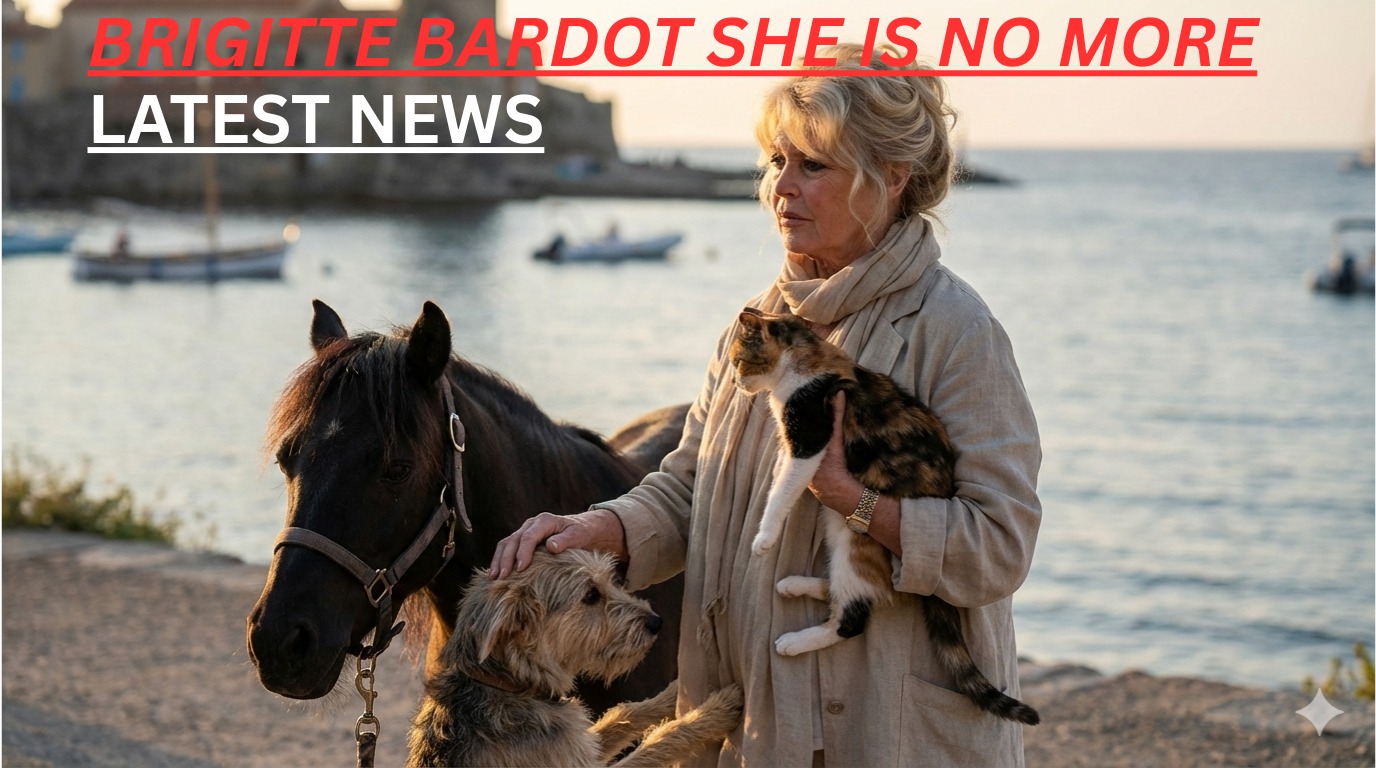
Even during her acting career, Bardot had shown concern for animal welfare. But after retiring, this concern transformed into a full-blown mission. She moved permanently to her villa, La Madrague, in Saint-Tropez, surrounding herself with rescued animals.
In 1986, she founded the Brigitte Bardot Foundation for the Welfare and Protection of Animals. This wasn’t a celebrity vanity project—it was (and still is) one of the most influential animal rights organizations in the world.
What did the foundation fight for? Everything:
- Ending animal testing in cosmetics and laboratories
- Banning fur farming and the fur trade
- Protecting endangered species from poaching
- Fighting against bullfighting and other cruel traditions
- Rescuing and rehabilitating abused animals
- Promoting vegetarianism and veganism
Bardot didn’t just write checks—she was hands-on, vocal, and uncompromising. She lobbied politicians, appeared in campaigns, and used her celebrity status to draw attention to causes that mattered.
Controversy and Criticism
Bardot’s activism wasn’t without controversy. In her later years, she made several statements that sparked backlash, particularly regarding immigration and Islam. Some criticized her views as xenophobic, and she was even fined multiple times for inciting racial hatred.
But here’s the complex truth: people are rarely one-dimensional. Bardot’s contributions to animal welfare are undeniable and have saved countless lives. Her controversial statements don’t erase that legacy, but they do complicate it.
It’s a reminder that icons are human—flawed, complex, and sometimes contradictory.
🔥 Silver Rate Today in India (LIVE): State-Wise Prices & Trends 🔥
The Final Years: A Quiet Goodbye
Living on Her Own Terms
In her final decades, Bardot lived a reclusive life at La Madrague. She rarely gave interviews, avoided public appearances, and spent her days caring for her animals. Her last major public appearance was in September 2024, when she celebrated her 90th birthday.
Friends described her as content—no longer the restless starlet searching for meaning, but a woman at peace with her choices. She had found her purpose, and it wasn’t on a movie set.
On December 28, 2025, Brigitte Bardot passed away peacefully at her home, surrounded by the animals she loved so dearly. The announcement came from her foundation, confirming that the world had lost not just an icon, but a tireless advocate for the voiceless.
Global Tributes
The response to her passing was immediate and heartfelt. French President Emmanuel Macron paid tribute, acknowledging her dual legacy as a cinematic icon and an animal rights pioneer. He noted that she embodied “a life of freedom” through both her films and her activism.
Animal rights organizations worldwide mourned her loss, crediting her with bringing mainstream attention to issues that were once considered fringe. Without Bardot, many believe the animal rights movement would have taken decades longer to gain traction.
Fans from generations who never even saw her films mourned her passing. That’s the power of true iconography—it transcends time.
Why Brigitte Bardot Still Matters Today
Beyond the Beauty
It’s easy to reduce Bardot to her physical beauty. But that would be missing the point entirely. Yes, she was stunning. Yes, she was a sex symbol. But she was also:
- A pioneer who challenged social norms about female sexuality
- An entrepreneur who successfully pivoted careers when she could have coasted on fame
- An activist who dedicated half her life to a cause bigger than herself
- A symbol of authenticity in an industry built on pretense
Lessons from Her Life
What can we learn from Brigitte Bardot’s extraordinary journey?
First, that fame isn’t everything. In a world obsessed with celebrity culture, Bardot showed us that walking away from the spotlight can be the bravest choice.
Second, that it’s never too late to find your purpose. She discovered her true calling at 39—an age when many people feel stuck in their paths.
Third, that using your platform for good matters. Bardot leveraged her fame to create real change. How many celebrities today can claim the same level of commitment to their causes?
Her Lasting Impact on Cinema
Film historians recognize Bardot as a key figure in the French New Wave movement, even though she wasn’t directly part of its theoretical framework. Her work with directors like Godard helped define European cinema in the 1960s.
She represented a new kind of femininity on screen—natural, sensual, and unpolished. Before Bardot, Hollywood glamour dominated global cinema. After her, there was room for a more authentic, European aesthetic.
Her Lasting Impact on Animal Rights
The Brigitte Bardot Foundation has rescued thousands of animals, influenced legislation across Europe, and inspired a generation of activists. Her celebrity brought attention to issues that governments and corporations wanted to ignore.
Today, when we see campaigns against animal testing, fur farming, or factory farming, we can trace some of that momentum back to Bardot’s fearless advocacy.
❓ FAQ Section: Everything You Wanted to Know About Brigitte Bardot
Q1. When and where did Brigitte Bardot die?
A: Brigitte Bardot passed away on **December 28, 2025**, at her home in **Saint-Tropez, France**. She was 91 years old and reportedly died peacefully surrounded by her beloved animals.
Q2. What was Brigitte Bardot most famous for?
A: She was a French cinematic icon and a global **sex symbol of the 1950s and 60s**. Her role in “And God Created Woman” (1956) made her a worldwide sensation. Later, she became equally famous as a fierce **animal rights activist**.
Q3. Why did Brigitte Bardot retire from acting so young?
A: Bardot retired in **1973 at the age of 39**. She felt disillusioned with the film industry and tired of being objectified, choosing instead to dedicate the rest of her life to a cause she found more meaningful: animal welfare.
Q4. What is the Brigitte Bardot Foundation?
A: Founded in **1986**, it is one of the world’s most influential animal rights organizations. The foundation rescues abused animals and fights for stronger welfare laws globally.
Q5. How many films did Brigitte Bardot make?
A: During her career spanning two decades, she appeared in **over 40 films**, including masterpieces like “Contempt” and “Viva Maria!”.
Q6. Was Brigitte Bardot married?
A: Yes, she was **married four times**: to Roger Vadim, Jacques Charrier, Gunter Sachs, and finally to Bernard d’Ormale (from 1992 until her death).
Q7. Did Brigitte Bardot have children?
A: She had **one son, Nicolas-Jacques Charrier**, born in 1960. Bardot was famously candid about her personal struggles with motherhood and maintained a somewhat distant relationship with him over the years.
Q8. What controversies was Bardot involved in?
A: In her later years, Bardot faced significant criticism for her political views. She was **fined 5 times** in France between 1997 and 2008 for “inciting racial hatred” due to her controversial statements regarding immigration and Islam.
Q9. What animals did Bardot keep at her home?
A: Her villa, La Madrague, was a sanctuary for dozens of rescued animals, including **dogs, cats, horses, donkeys, and pigs**, all of which she treated as her closest companions.
Q10. What was Brigitte Bardot’s influence on fashion?
A: She was a massive style icon who popularized the **”Bardot neckline”** (off-the-shoulder), gingham prints, and the high-waisted bikini. Her signature tousled blonde “beehive” hair is still referenced by designers today.
Q11. Did Brigitte Bardot win any major awards?
A: While she didn’t win an Oscar, she was honored with the **Legion of Honour** (France’s highest distinction) in 1985 for her cultural impact and her work for animal rights.
Q12. How will Brigitte Bardot be remembered?
A: She leaves a complex legacy: half as a **cinematic revolutionary** who defined the “New Wave” era, and half as a **passionate crusader** who used her fame to speak for those who had no voice—animals.
Conclusion: The Icon Who Lived on Her Own Terms
Brigitte Bardot’s death marks the end of a remarkable chapter in cultural history. She lived 91 years that were anything but ordinary.
From a Parisian ballerina-in-training to the world’s most desired woman, from a disillusioned actress to a fierce animal rights crusader—her journey was marked by reinvention, rebellion, and purpose.
In an age of influencers and fleeting internet fame, Bardot’s story reminds us what true iconography looks like. It’s not just about being famous—it’s about standing for something. It’s about having the courage to walk away when something no longer serves your soul. It’s about using your voice for those who have none.
Yes, she was controversial. Yes, she was complicated. But she was also authentic, brave, and unforgettable.
As we say goodbye to Brigitte Bardot, perhaps the best tribute is to ask ourselves: Are we living authentically? Are we fighting for what we believe in? Are we willing to sacrifice comfort for conviction?
Those are the questions her life poses to all of us.
Rest in peace, BB. The world was more beautiful, more passionate, and more compassionate because you were in it. 🕊️