

Apple is building an Apple AI agent that can use a Mac the way a person does. That is not a rumor from an anonymous supply-chain source — it is written in Apple’s own job listings, spotted by Bloomberg this week. The company is hiring a senior engineering manager to lead work on a “proactive, agentic AI assistant” that browses the web, works across apps, runs commands, writes and debugs code, and calls services on your behalf. In other words, Apple wants its own answer to Meta’s Muse, OpenAI’s Dots and Anthropic’s Claude computer use — and it wants it running natively on the Mac.
Key takeaways
- Apple job listings posted November 17, 2026 describe an AI agent that uses a computer “the way a capable person does” — browsing, coding, running commands and working across apps.
- The agent is still in the early stages, and Bloomberg reports Apple has eyed a launch as soon as the end of 2027.
- At the same time, macOS 27.3 beta is making it harder for rival agents to take full control of a Mac — enabling third-party computer use now takes 14 steps, up from four.
- New CEO John Ternus, in charge since September 1, 2026, is pushing software chief Craig Federighi to move faster on AI.
- No product name, price or supported hardware has been announced, and Apple declined to comment.
Apple AI Agent: What Apple is building
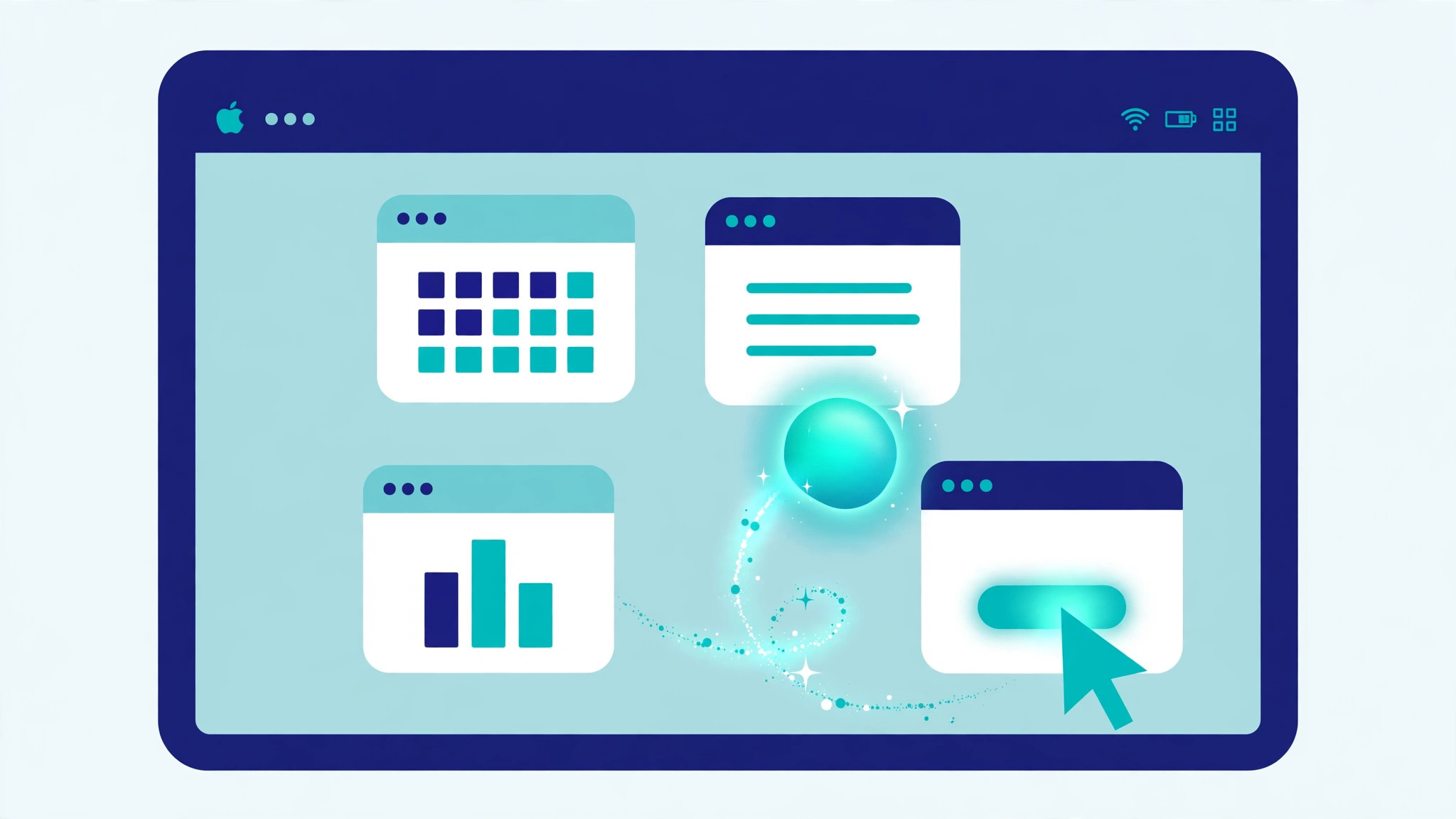
The clearest evidence is the job listing itself, for a “Senior Engineering Manager, Agentic AI — Proactive.” Its pitch reads like a product announcement: “Imagine an AI agent that can use a computer the way a capable person does. It browses the web, works across apps, runs commands, writes and debugs code, and calls services, and it chooses the right tool for each step. It does all this privately and with the polish people expect from Apple.”
The listing says Apple already has a team building “general-purpose computer-use agents” — the technology that lets ChatGPT and Claude control a Mac today. The agents Apple is building, the listing adds, can “plan and carry out multi-step tasks across apps, browsers, command lines, code, and APIs, and they can coordinate specialized sub-agents along the way.”
Bloomberg had already reported earlier this month that Apple was working on its own AI agent offering, and separately that Apple wants to make Siri more like an autonomous agent that acts without being asked at every step, with those capabilities possibly arriving as soon as next year. The new listings are the most detailed public evidence yet of how far the plan goes: not just a smarter Siri, but an agent that can drive the whole computer.
What the agent would actually do
Based on the listings, the agent is being designed for the kind of work people actually do by jumping between tools — and the listing says so explicitly: “People already do their most valuable work by moving fluidly between tools: a browser, a document, a terminal, an editor, a service. We’re building AI agents that can do the same.”
In practice, that points to jobs like these:
- Browse and research: open websites, gather information across tabs and summarize it, the way a person would.
- Work across apps: move information between a browser, a document and an email without you copying and pasting at every step.
- Write and debug code: run commands, edit files and fix errors in a terminal or editor.
- Call services: use APIs and online services to complete multi-step tasks, coordinating smaller sub-agents for parts of the job.
The emphasis on privacy is notable, and very Apple: the agent would do all of this “privately,” which suggests on-device processing through Apple Foundation Models wherever possible, rather than sending everything to the cloud. That is also the biggest open question. Running a genuinely capable agent locally is hard, and Apple has not said which Macs would support it, or whether the heaviest work would still run on Apple’s servers.
The macOS 27.3 catch: Apple is locking the door for rivals
Here is the part of the story that matters right now, because it affects Mac users today. While Apple builds its own agent, it is also making it significantly harder for third-party agents to gain total control over a Mac.
In October, Apple warned developers that Full Disk Access — a permission originally meant for backup apps — was being used in ways that could expose browsing history, mail, messages and other files without users fully grasping the risk. The company said it planned to “introduce additional controls to ensure that users who genuinely wish to grant an app this extraordinary level of access can only do so with very explicit user action.”
Those controls are now showing up in the macOS 27.3 beta. The old Device Control and Data Access setting splits into two new ones — System & App Protection Override and Accessibility — and users can limit an app to chosen folders or apps, require it to ask every time, and see an on-screen indicator when one app is steering another. According to Bloomberg’s reporting, ChatGPT users now need to go through 14 distinct steps to enable support for third-party computer-use tools, up from four.
Apple’s framing is safety, and the risk is real: an agent with full disk access can read almost everything on your Mac. But the timing is hard to ignore. The company is raising the drawbridge for competing agents at exactly the moment it is building its own. If Apple’s agent eventually ships with deep system access built in, while rivals have to fight through 14 steps and warning screens, that is a meaningful competitive advantage — and one regulators in the US and Europe will almost certainly look at.

Why now: the Ternus era and the agent race
The push has a clear driver at the top. John Ternus has led Apple since September 1, 2026, and Bloomberg reports he has been pressing software engineering chief Craig Federighi to move faster on AI. The company is also turning Siri into a more proactive agent, and its AI glasses are reportedly aimed at late 2027 — the agent for Mac looks like one piece of a much bigger bet on an Apple AI layer across every device it sells.
The competitive picture explains the urgency. Meta’s Muse has broken out with consumers in recent months by making restaurant reservations, booking travel and preparing briefings. OpenAI’s Dots assistant is chasing the same idea, as we explain in OpenAI Dots Explained, and Google just shipped computer use in the Gemini app for Mac. Every major AI company now agrees the next step is not a chatbot that answers questions, but an agent that does the work — and Apple, the company that owns the Mac itself, does not yet have one of its own. The broader shift is the same one we track in our roundup of 7 AI Trends in 2026: agents that complete multi-step jobs are becoming the default way people use AI.

What it means for Mac users
For now, the honest answer is: not much changes today, but two things are worth doing. First, if you use a third-party AI agent on your Mac, expect macOS 27.3 to ask you to re-confirm its access, with clearer warnings about what full control means.
Second, do not wait for Apple’s agent before choosing an AI tool. The company’s own reporting puts a launch as soon as the end of 2027, and development “remains in the early stages” — and that date is reported, not announced. Google’s Gemini computer use is already rolling out on Mac, and OpenAI and Anthropic agents are available now. Apple’s version may eventually be the most deeply integrated option, because it owns the operating system, but it is at least a year away.
The bigger question is what Apple does with the gatekeeper role. If its own agent gets system-level access that rivals cannot match, expect a fight — with developers, with regulators, and with users who want to choose their own agent. Apple has spent decades arguing that tight control is what makes its products safe and polished. The AI agent era is about to test that argument in public.
FAQ
Is Apple building its own AI agent?
When will Apple’s AI agent launch?
What can Apple’s AI agent do?
Why is macOS 27.3 making third-party AI agents harder to use?
How is Apple’s agent different from Siri?
Apple’s AI agent is real, it is early, and it is at least a year away. The more immediate story is the one already on your Mac: macOS 27.3 is about to make you think twice before handing any AI agent the keys to your computer — including, eventually, Apple’s own.
Sources: Bloomberg reporting via TechCrunch (Nov 19, 2026); MacRumors (Nov 19, 2026); 9to5Mac (Nov 19, 2026). Launch timing is reported, not confirmed by Apple.
External sources: TechCrunch · MacRumors