

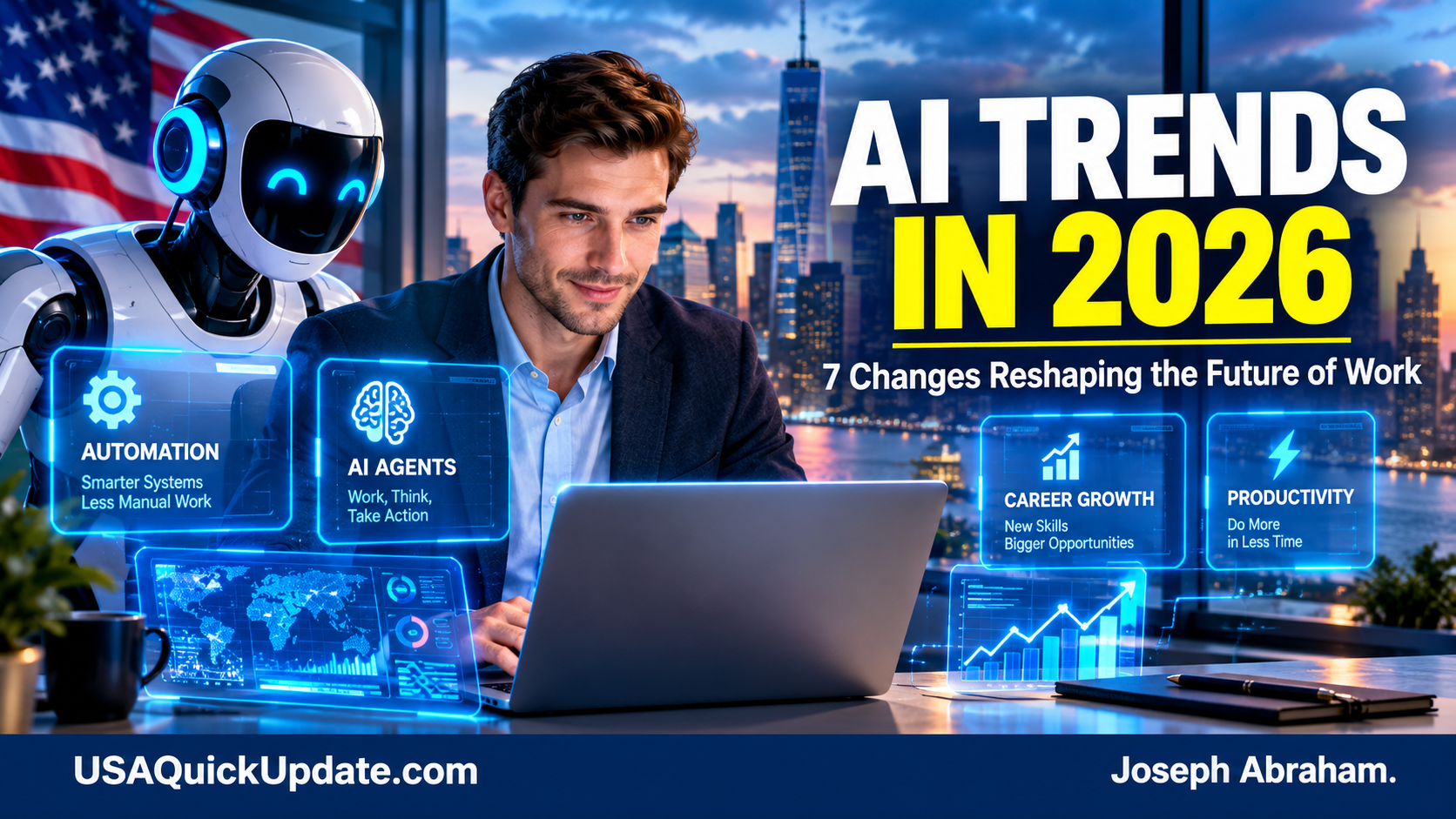
7 AI Trends in 2026 That Could Change How Americans Work
Artificial intelligence is no longer just a technology people experiment with for fun. It is becoming part of everyday work, from writing emails and analyzing data to helping businesses manage customer service. In 2026, the biggest change is not simply that AI can answer questions. It is that newer AI tools can help people complete entire tasks.
For American workers, business owners, and job seekers, this shift brings both opportunities and concerns. Some tasks may become easier, while others may require new skills.
So, which AI trends in 2026 deserve your attention? Here are seven developments worth watching and what they could mean for your work and daily life.
1. AI Agents Are Moving Beyond Basic Chatbots
Also read: 12 Best Electric Cars 2026: Powerful EVs Worth Buying in the USA
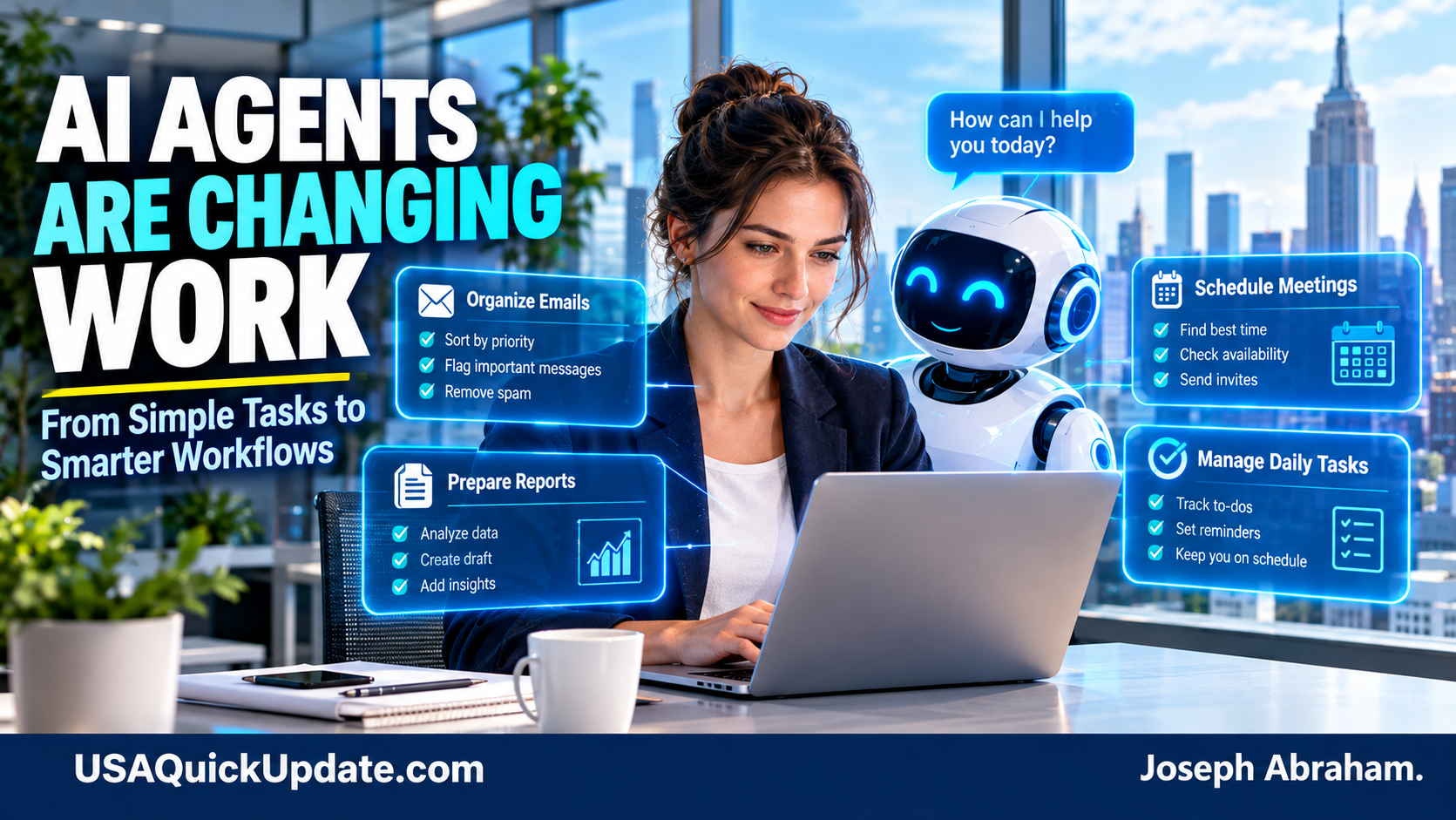
AI agents are becoming one of the most talked-about developments in artificial intelligence. Unlike a traditional chatbot that mainly responds to questions, an AI agent can be designed to carry out a series of tasks toward a specific goal.
For example, a business might use an AI agent to organize customer inquiries, prepare a report, or collect information from approved business systems. A human employee can then review the results before taking action.
However, AI agents are not completely independent digital employees. They can misunderstand instructions, make mistakes, or require human supervision.
Why it matters: Businesses may increasingly look for ways to automate repetitive work while allowing employees to focus on decisions that require judgment and experience.
2. AI Automation Could Change Everyday Office Work
Also read: Sensex Today: Sensex Falls 200 Points, Nifty Below 22,500
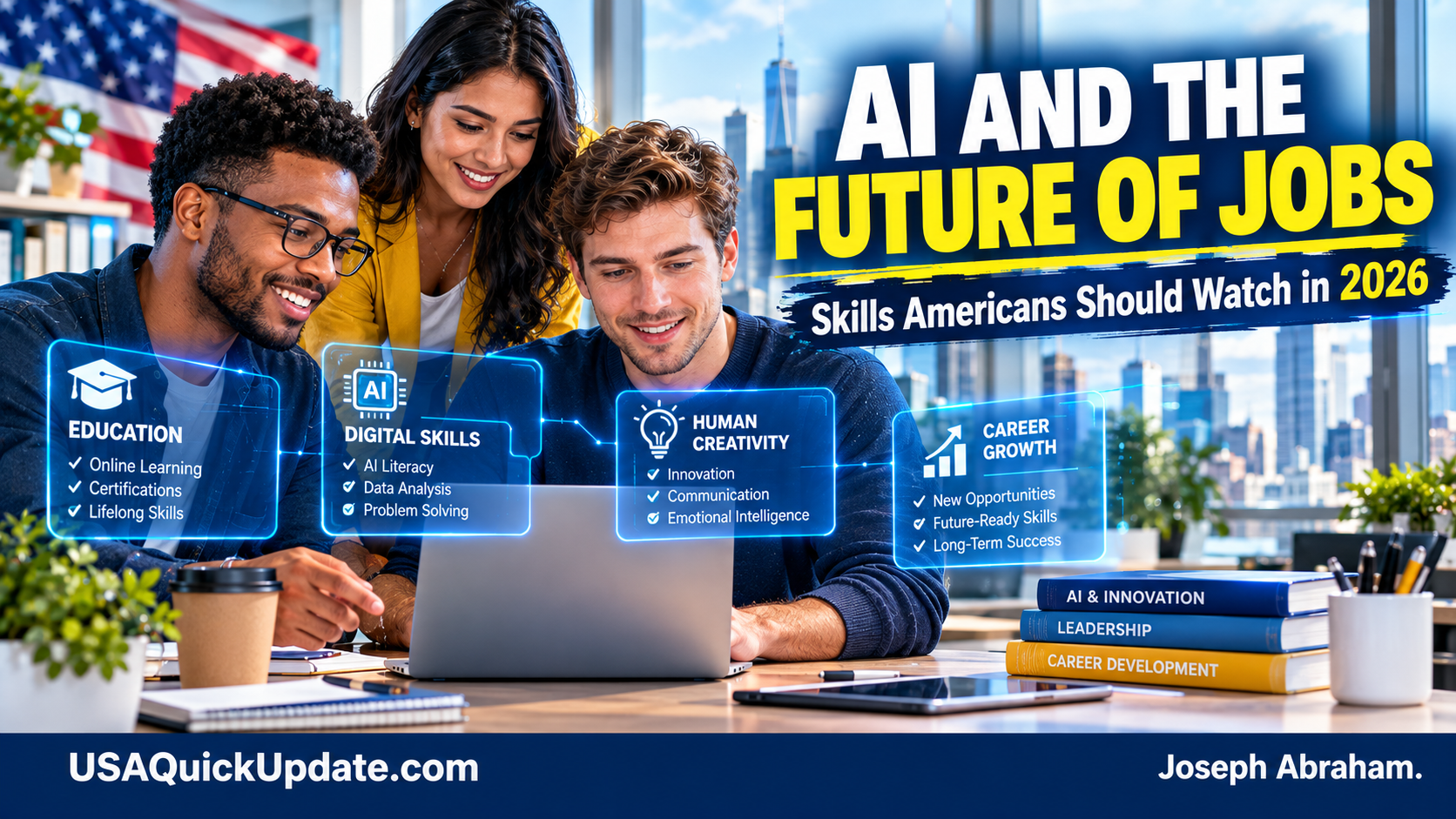
AI automation is expanding beyond simple data entry. Depending on the software and how it is configured, AI tools can help draft documents, summarize meetings, sort information, and prepare customer responses.
Imagine an employee who spends an hour reviewing meeting notes and writing follow-up emails. An AI assistant might create the initial summary and draft the emails in minutes. The employee can then check the details and make corrections.
That does not mean every task will become faster or that every company will benefit equally. AI output still needs to be checked, particularly when accuracy matters.
What workers should do: Learn how to use AI tools for routine tasks, but keep practicing the communication, problem-solving, and decision-making skills that make your work valuable.
3. Small Businesses Are Finding Practical Uses for AI
Also read: OpenAI Dots Explained: New AI Assistant Can Work in the Background
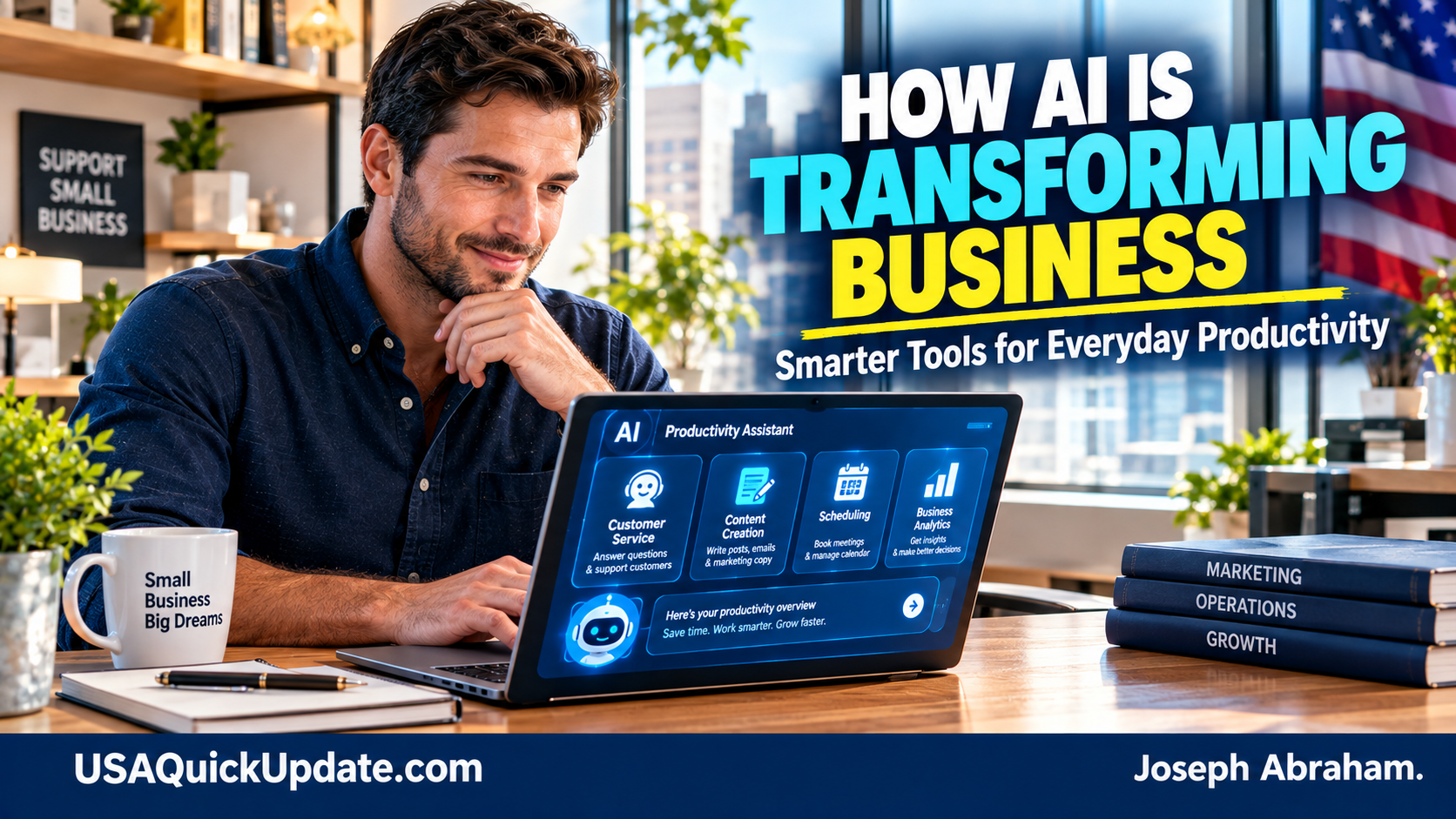
AI is not only relevant to large technology companies. Small businesses may also use AI-powered tools to handle everyday responsibilities without adding more manual work.
A local retailer, for instance, could use AI to draft product descriptions, prepare social media posts, or answer common customer questions. A freelancer might use it to organize research or create a first draft of a proposal.
The key is choosing a tool that solves a real problem rather than adopting AI simply because it is popular.
Business owners should also review subscription costs, privacy policies, and the accuracy of AI-generated material before relying on it.
The takeaway: Practical AI tools can help small businesses save time, but good planning and human oversight remain essential.
4. AI Skills Could Become More Important in the Job Market
Also read: Auqib Nabi India Debut: J&K Star Gets Maiden ODI Cap vs West Indies
As companies explore AI, workers may face changing expectations in hiring and training. Some employers may value candidates who know how to use AI tools responsibly alongside their existing professional skills.
For example, a marketing employee might use AI to brainstorm campaign ideas, while a financial analyst might use it to organize information before conducting a detailed review.
Still, AI skills alone are unlikely to replace the need for industry knowledge, experience, and sound judgment.
People considering a career change can start by learning the AI features already available in their field. They should also understand how to check outputs, protect confidential information, and recognize errors.
A smart approach: Treat AI as a skill that complements your experience, not as a shortcut that guarantees a job.
5. AI and Job Security Will Remain Important Concerns
Also read: Business Insider: Managing AI agents can be as challenging as managing people
Will AI take jobs away? It is a reasonable question, but the answer is more complicated than a simple yes or no.
AI can automate certain activities within a job without necessarily eliminating the entire role. Some workers may spend less time on repetitive tasks, while others could face changes in responsibilities or demand for their skills.
The effects will depend on the occupation, the employer, the technology being adopted, and how work is reorganized.
For American workers, a practical response is to strengthen skills that work well alongside AI. These include critical thinking, customer relationships, creativity, communication, and problem-solving.
Employers also have a responsibility to provide appropriate training and explain how AI will affect workplace processes.
6. AI Privacy and Security Will Need More Attention
Also read: Reuters: A framework for governing employees’ existing use of generative AI
AI can be useful, but careless use can expose sensitive information. Employees might accidentally share customer details, internal documents, or confidential business data with an unapproved tool.
AI agents may introduce additional risks when they can access email accounts, company records, or other connected systems.
Businesses should establish clear AI policies, limit access to sensitive information, and require human approval for important actions.
Individuals can protect themselves by checking a tool’s privacy settings, understanding how their information may be used, and avoiding the upload of confidential material without authorization.
The National Institute of Standards and Technology also provides guidance for organizations managing AI-related risks through its AI Risk Management Framework.
Remember: Convenience should never come at the expense of data security.
7. Human Judgment Will Still Matter in an AI-Driven Workplace
Also read: NIST: Artificial Intelligence Risk Management Framework
Even as AI tools improve, their outputs are not automatically correct. They can produce inaccurate information, misunderstand context, or present uncertain claims with confidence.
That is why human judgment remains important. A journalist must verify facts, a business owner must evaluate important decisions, and a healthcare professional must apply appropriate expertise when working with AI-assisted information.
The most useful approach is to let AI assist with suitable tasks while keeping people responsible for reviewing consequential decisions.
Workers who understand both the capabilities and limitations of AI may be better prepared to adapt as their industries change.
🤖 FAQ: AI Trends, Jobs & Skills 2026
🚀 Q1. What are the biggest AI trends in 2026?
Ans: Major areas to watch include AI agents, workplace automation, small-business applications, AI skills, changing job responsibilities, data security, and human oversight.
💼 Q2. Will AI replace jobs in the United States?
Ans: AI may automate some tasks and change certain occupations, but its effects will vary by industry and role. It is not accurate to assume that every job exposed to AI will disappear.
💡 Q3. Which AI skills should workers learn first?
Ans: Start with practical skills such as writing effective prompts, checking AI-generated information, protecting private data, and using relevant AI tools in your profession.
🛡️ Q4. Is AI safe to use at work?
Ans: AI can be useful when used responsibly. Employees should follow workplace policies, avoid sharing confidential information with unapproved tools, and verify important outputs before acting on them.
Conclusion: Prepare for the Future of AI at Work
The biggest AI trends in 2026 point toward a workplace where people and AI tools increasingly work together. AI agents, automation, and accessible business tools could change how everyday tasks are completed, but they also create questions about job security, accuracy, and privacy.
For American workers and business owners, the best response is to stay curious, learn useful skills, and evaluate new technology carefully.
You do not need to master every AI tool. Start by learning how one useful tool can solve a real problem in your work. That practical approach can help you adapt as artificial intelligence continues to evolve.
[…] 📰 Read also: Tech & Gadgets 7 AI Trends in 2026 That Could Change How Americans Work […]
[…] 📌 Also Read:7 AI Trends in 2026 That Could Change How Americans Work […]