


The Riemann Hypothesis proof posted on November 20, 2026, is one of the strangest milestones in the history of mathematics. A mathematician working with an AI model claims to have proved a problem first posed in 1859 — and independent mathematicians who have checked the work say they are confident it is correct. At the same time, no human yet understands the full proof, it has not been peer-reviewed, and the $1 million prize for solving the problem has not been awarded. All of those things are true at once, and understanding why is the real story here.
Levent Alpöge, a mathematician at Anthropic, posted the proof on his personal website on November 20, 2026, working with Anthropic’s Claude AI model. It arrived as a PDF note and as Lean code — about 17 million lines of it. The next day, the Lean and Mathlib communities issued a joint statement, endorsed by the Lean FRO and the Mathlib Initiative: “We have full confidence that Alpöge’s proof of the Riemann Hypothesis is correct.”
- Levent Alpöge of Anthropic posted a proof of the Riemann Hypothesis on November 20, 2026, produced working with Claude, as a PDF note and about 17 million lines of Lean code.
- The Lean and Mathlib communities issued a joint statement on November 21: “We have full confidence that Alpöge’s proof of the Riemann Hypothesis is correct.”
- Independent mathematicians, including Andrew Sutherland of MIT, recompiled the proof on their own machines, and multiple independent checkers accepted it.
- No human yet understands the full proof; only a first readable outline of its strategy appeared on November 21.
- The generalized Riemann Hypothesis part is not yet certified, and the Clay Mathematics Institute still lists the problem as unsolved for its $1 million prize process.
What is the Riemann Hypothesis?
The Riemann Hypothesis was first posed in 1859 by the German mathematician Bernhard Riemann. It proposes a hidden pattern behind the distribution of prime numbers — the numbers divisible only by one and themselves, such as 2, 3, 5, 7, and 11. Primes look irregular as they get larger, appearing at unpredictable intervals, and Riemann’s hypothesis describes a precise pattern governing where they show up.
The problem matters far beyond pure curiosity. Prime numbers underpin modern cryptography, including the encryption that protects online banking and messaging. It is one of the Clay Mathematics Institute’s Millennium Prize Problems, carrying a $1 million prize, and it has resisted proof for more than a century and a half.

How a 17-million-line Riemann Hypothesis proof gets checked
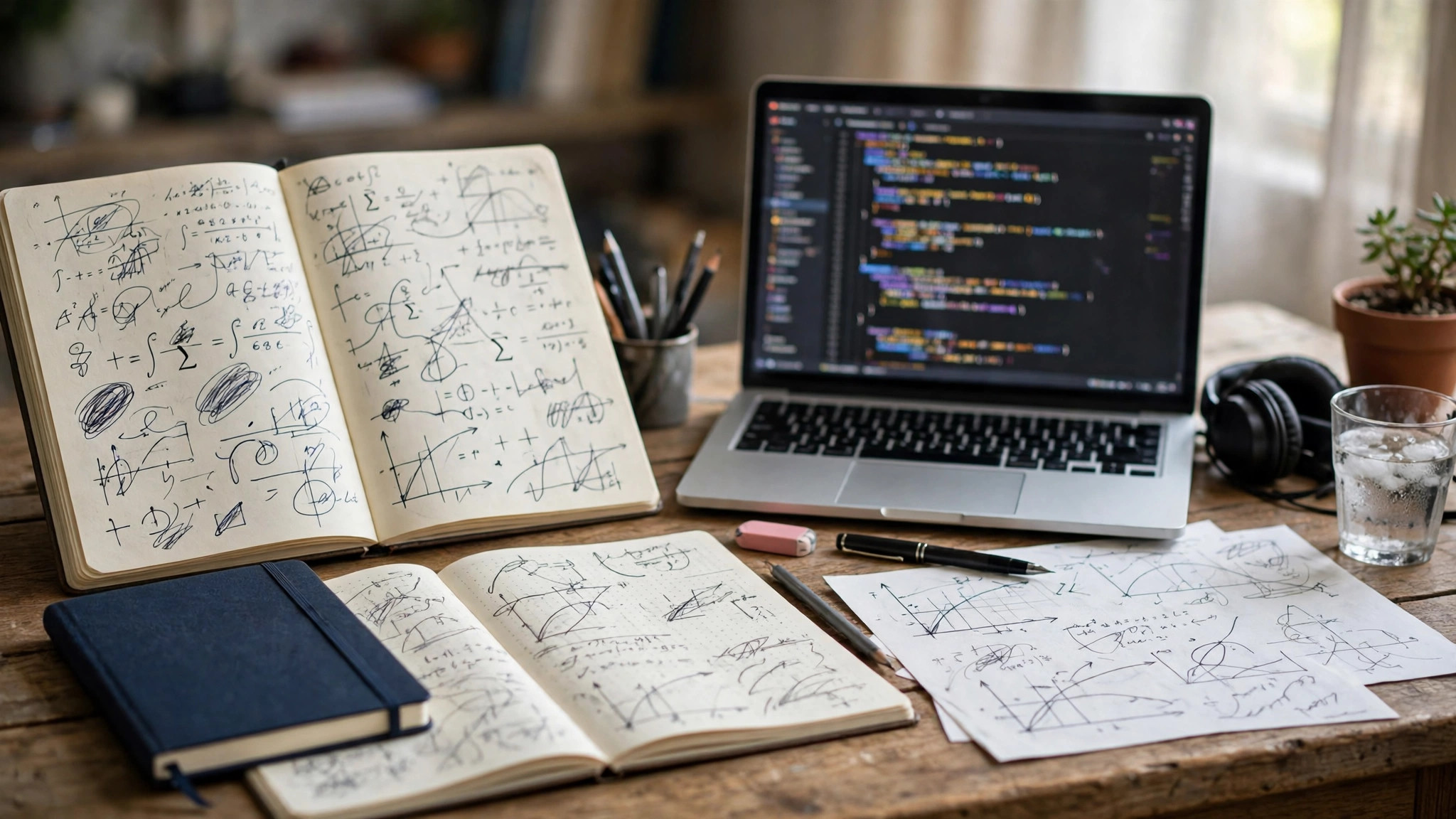
The proof is about 17 million lines of Lean code — 17,374,215 lines in 175,187 files, per one detailed account. No human could read that in a lifetime, let alone verify it by hand. That is exactly why the choice of Lean matters.
Lean is a programming language and proof assistant. In Lean, a proof is written as code, and every logical step must be accepted by a small trusted program called a kernel. If the code compiles error-free using only standard axioms, then the logic holds step by step — the computer has checked every link in the chain, even if no person has followed all of them. A human proof relies on a reader’s judgment at each step; a Lean proof replaces that judgment with a mechanical check that can be repeated by anyone with a computer.
That repeatability is what happened here. Independent mathematicians, including Andrew Sutherland of MIT, recompiled the proof on their own machines — Sutherland said: “Honestly the chance that anything is fishy here is approximately zero.” Multiple independent checkers — Lean’s official kernel, con-leche, nanoda, and lean4lean — accepted the proof.
What Claude actually did — and what it did not
It is tempting to describe this as “an AI solved the Riemann Hypothesis,” but that wording misses the human half of the story. The proof was produced by Alpöge working with Claude, Anthropic’s AI model. Alpöge is a professional mathematician, and the work involved guiding, steering, and shaping a proof effort that no current AI model could plausibly have completed alone, unguided, from a blank page.
The honest description is a collaboration: a mathematician with deep expertise in the area, using an AI system as a powerful partner for generating, organizing, and checking an enormous formal argument. That is still a remarkable development. AI models have helped with mathematical research before, but nothing at this scale, on a problem of this stature, has ever been certified correct in this way.
Alpöge works at Anthropic, the company behind Claude, which went public in November in one of the largest IPOs on record — covered in our Anthropic IPO report. The company’s models are now being positioned as tools for serious research, not just chatbots, and a certified proof of the Riemann Hypothesis is the strongest evidence yet for that claim. It also raises the competitive stakes for OpenAI’s GPT-6.2 Astra and Sol and Google’s Gemini 4 Neon, as the AI trends shaping 2026 increasingly point toward models doing genuine expert work.
What is still missing: understanding, peer review, and the prize
For all the confidence in the proof’s correctness, the story is far from finished — and the gaps matter as much as the result. The most striking gap is understanding. No human yet understands the full proof. Only a first readable outline of its strategy appeared on November 21, written by mathematician Michael Rubinstein. A 17-million-line formal proof is a certificate of correctness, not an explanation. Mathematicians still need a human-readable account of why the proof works before the result can be absorbed into the field and built upon.
Second, the generalized Riemann Hypothesis part is not yet certified. Third, the proof has not been peer-reviewed in the traditional sense: formal verification by a computer kernel is a different kind of check from human peer review, and the community will still need a readable human proof and conventional peer review before the result is fully accepted.
The Clay Mathematics Institute still lists the problem as unsolved for its $1 million prize process, which requires a published solution to survive at least two years of scrutiny and peer review. That clock has not even started. None of this makes the proof less real. It makes it a new kind of mathematical event: a result certified correct by machine before any human fully understands it.

Why this matters beyond mathematics
If the proof stands — and the independent checks so far give every reason to think it will — it changes two things at once. For mathematics, it settles the most famous open problem in the field: the techniques behind the proof, once understood, are likely to unlock other problems that have resisted attack for decades.
For AI, it is a proof of capability, not just a proof of a theorem. A model that can help produce a certified 17-million-line proof of a 167-year-old problem is doing work that was, until now, exclusively human. That does not mean AI will replace mathematicians — the proof still needed a mathematician to direct it, and still needs mathematicians to understand it.
Frequently asked questions
Who proved the Riemann Hypothesis?
How do mathematicians know the proof is correct?
How long is the Riemann Hypothesis proof?
Has the $1 million Millennium Prize been awarded?
Does any human understand the proof yet?
The Riemann Hypothesis proof is a milestone that refuses to fit into a simple headline. It is certified correct and not yet understood, produced with AI and still dependent on human mathematicians, a solved problem and an open prize. The checking is done. The understanding — and the history books — will take longer.
Sources: Levent Alpöge’s posted proof (personal website, PDF note and Lean code); joint statement from the Lean and Mathlib communities; Scientific American report on independent verification.
External links: Scientific American: The AI Riemann Hypothesis Proof Is Almost Certainly True, Independent Mathematicians Attest | Lean Prover Community blog



Pingback: Claude Rust Migration: Anthropic's API Rewrite Cuts CPU 70%