


NVIDIA’s RTX Spark mini PCs are here, and they are the strangest new computers of the year: a box smaller than a hardcover book that can run a 120-billion-parameter AI model entirely on its own, with no cloud, no subscription and no data leaving your desk. Compact desktops from ASUS, Dell and MSI went on sale November 18, 2026, starting at $4,399 — with fully loaded models reaching $8,000. They are not for everyone. But for AI developers and creators who want a private AI workstation, there has never been anything quite like them.
Key takeaways
- NVIDIA RTX Spark compact desktops launched November 18, 2026, from ASUS, Dell and MSI, starting at $4,399. Acer, Gigabyte, HP and Microsoft versions follow.
- Each machine pairs a 20-core Grace CPU with a Blackwell RTX GPU (6,144 CUDA cores) and up to 128GB of unified memory, delivering up to 1 petaflop of FP4 AI performance.
- They can run language models with up to 120 billion parameters entirely on-device, edit 8K 4:2:2 video, and render 3D scenes over 90GB.
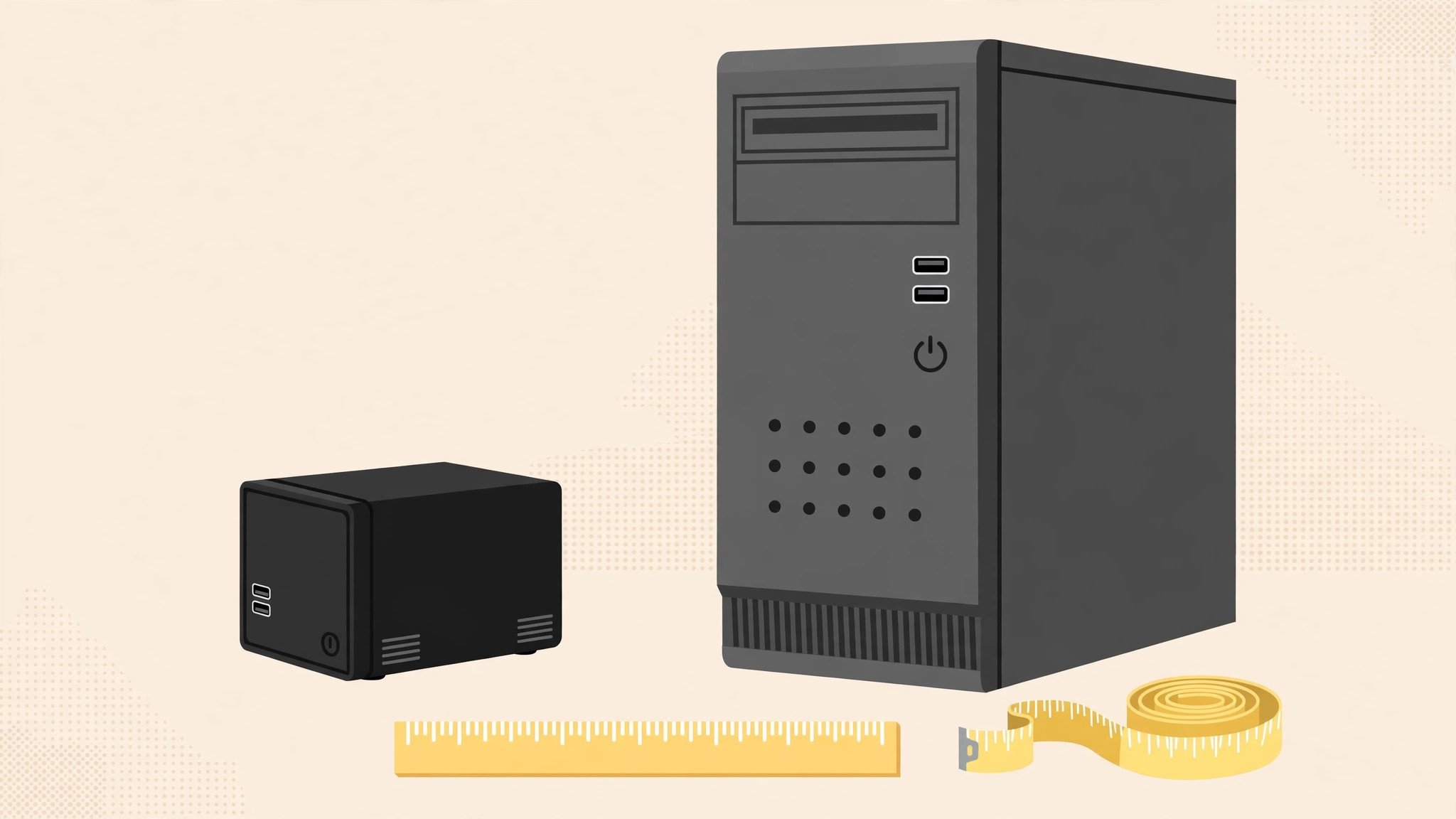
- The box measures just 152 x 147 x 53 mm and weighs 2.91 lbs. Laptops with the same platform start at $2,599.
- The catch: Windows 11 on Arm limits some software, and the price puts it far beyond a normal desktop — this is a workstation, not a family PC.
What NVIDIA RTX Spark actually is
RTX Spark is a platform, not a single computer. At its center is a superchip that combines an NVIDIA Blackwell RTX GPU with an NVIDIA Grace CPU and shared unified memory of up to 128GB — the same memory pool feeds both processors, so a huge AI model can sit in memory without being shuffled between separate RAM and video memory. NVIDIA claims up to one petaflop of FP4 AI performance, which is the number that matters for running large models locally.
The desktops are the new part. RTX Spark laptops have been out for about a month, starting at $2,599, but the mini PCs are the first desktops on the platform — and the first to use the chip’s full power budget, since a desktop does not have to worry about battery life. In XDA’s hands-on review of the MSI EdgeMesa N AI+, the machine scored 8 out of 10, with the reviewer noting that the mini PC form factor lets you use the full TDP of the chip — “perfect for local LLM use.”
Specs and price: the full picture
| Spec | RTX Spark mini PC |
|---|---|
| CPU | NVIDIA Grace, 20 cores |
| GPU | Blackwell RTX, 6,144 CUDA cores |
| Memory | Up to 128GB LPDDR5x unified |
| Storage | Up to 4TB Gen5 SSD |
| AI performance | Up to 1 petaflop (FP4) |
| Ports | 4x USB-C 20 Gbps, 10 GbE, HDMI 2.1 |
| Networking | Wi-Fi 7, Bluetooth 5.4 |
| OS | Windows 11 (Windows on Arm) |
| Size / weight | 152 x 147 x 53 mm, 2.91 lbs (1.32 kg) |
| Price | From $4,399; MSI 128GB/4TB config $8,000; Microsoft Surface RTX Spark Dev Box $6,000 |
The first systems available are the ASUS ProArt GR1X mini PC and the MSI EdgeMesa N AI+ series. The Microsoft Surface RTX Spark Dev Box, with 128GB of RAM and a 2TB SSD, is priced at $6,000. Additional compact desktops from Acer, Gigabyte and HP are expected to follow. On the laptop side, the same platform powers machines like the Lenovo Yoga Pro 9n and the Dell XPS 16 Creator Edition — the laptops are the cheaper way in, but the desktops are where the chip runs at full power.


What it can actually do
The headline use case is local AI. NVIDIA says the desktops can run language models with as many as 120 billion parameters entirely on-device, with no cloud API costs and no project data leaving the machine. That matters for developers building AI agents, for companies with data that cannot leave the building, and for anyone tired of paying per-token API bills. The platform supports NVIDIA’s Nemotron 3.5 Bolt 74B model — a 74-billion-parameter model built for tool calling and multi-step tasks — and RTX Spark systems can also use NVIDIA PAIR to share AI inference with compatible Windows, Linux and macOS computers on the same home network.
For creators, the numbers are just as striking: the systems can edit 8K 4:2:2 video and render 3D scenes of up to 90GB, including when running on battery in the laptop versions. The platform includes NVIDIA’s full stack — CUDA, DLSS, OptiX, Reflex, G-SYNC, TensorRT and hardware-accelerated video — so it is a real creative workstation, not just an AI demo box.
Who should buy one — and who should not
Buy it if you are an AI developer or researcher who wants to run large models locally, build and test AI agents around the clock, or work with data that cannot go to the cloud. A compact desktop that runs 24/7 in a studio or office, sipping power while serving models to your whole home network, is a genuinely new kind of machine — and the 128GB of unified memory is the spec that makes it possible. NVIDIA’s own numbers explain why the company is pushing this so hard: the chip business just posted $115.8 billion in quarterly revenue, as we covered in our Nvidia earnings breakdown, and local AI is its next growth story. The company is also in the middle of a leadership transition after Jensen Huang’s resignation as CEO, which makes RTX Spark one of the first big launches of the post-Huang era.
Do not buy it if you want a gaming PC or a general family computer. Windows 11 on Arm means some Windows software — especially older games and niche professional tools — may not run, or may run through emulation. At $4,399 to $8,000, it is also far more expensive than a conventional desktop with similar everyday performance. And for most people, the AI models that matter — like Google’s Gemini 4 Neon — are cheaper and easier to use in the cloud for $19.99 a month. The broader context is the same shift we track in our roundup of 7 AI Trends in 2026: AI is moving from the cloud onto the desk, but for most users the cloud version is still the sensible choice.
What it means for US buyers
For now, RTX Spark is a niche product with a clear audience: developers, researchers and creators who need local AI power and are willing to pay workstation prices for it. The $4,399 starting price is the honest signal — NVIDIA is not trying to sell this to everyone. But the direction matters. A year ago, running a 120-billion-parameter model locally required a server rack. Now it fits in a box smaller than a book, on a desk, running Windows. If the price comes down — and laptop versions already start at $2,599 — local AI stops being a specialist tool and becomes something any serious creator can own. That is the bet NVIDIA is making, and the mini PCs on sale today are the first test of whether it pays off.
FAQ
What is NVIDIA RTX Spark?
How much does an RTX Spark mini PC cost?
What can RTX Spark run locally?
Is RTX Spark good for gaming?
Which companies sell RTX Spark mini PCs?
RTX Spark is not a computer for everyone — it is a workstation for people who want AI running on their own desk, on their own data, around the clock. At $4,399 and up, it is a serious investment. But it is also the first time that much AI power has fit in a box this small, and that is a genuine milestone.
Sources: XDA Developers RTX Spark mini PC review (Nov 19, 2026); NVIDIA RTX Spark launch coverage via Emergent and LazyFounder (Nov 18, 2026); Editorji and MySmartPrice India launch reports (Nov 20, 2026). Prices are launch prices and may vary by configuration and retailer.
External sources: XDA Developers · Emergent