



Claude Ship is Anthropic’s newest move in the AI coding race — a suite of agents, announced November 23, 2026, that takes a GitHub pull request through review, fixes, and an approval decision. The pull request used to be where coding agents stopped: Claude wrote the code, and a human did everything after. Ship is built to close that gap, and the part that will get argued about is the one that approves routine changes on its own, under a policy file the team writes.
- Claude Ship launched November 23, 2026, in beta for Claude Team and Enterprise customers with GitHub repositories.
- It is three agents, not one: Code Review (generally available), PR Steward (beta) and Claude Approvals (beta).
- A new /ship command in Claude Code pushes a change, opens the PR, reviews it and keeps working on feedback for up to seven days.
- Claude Approvals only approves what the team’s own policy file allows — teams can run it in observe-only mode first.
- Usage is billed on tokens; eligible Enterprise customers can claim at least $10,000 in promotional Claude Ship credits by January 15, 2027.
Claude Ship: the three agents, one by one
The split matters, because only one of the three is new in the “generally available” sense — and the other two are the ones that change who does the work after a PR opens.
Code Review is already generally available. It reads a proposed change alongside the surrounding code, verifies its findings, and posts them as inline comments ranked by severity. Each repository can pick a review depth: Quick, Standard, or Deep. It was announced in March and went generally available in October.
PR Steward is new, in beta. It does the unglamorous work after a review: failing CI checks, merge conflicts, and acting on feedback from Code Review, other review tools, or team members. After every push it comments explaining what it changed and how to roll it back. It is designed not to approve or merge pull requests itself.
Claude Approvals is also new, in beta — and it is the one people will argue about. It reads an approval policy the team writes in plain language and stores as a file in the repository (.claude/approvals.yml), evaluates the change against it, and reports whether the pull request still needs a human approval — or posts an approving review where the policy allows. The team, not the model, decides where it runs and which changes still need a human.

Two ways in: /ship and repo-wide
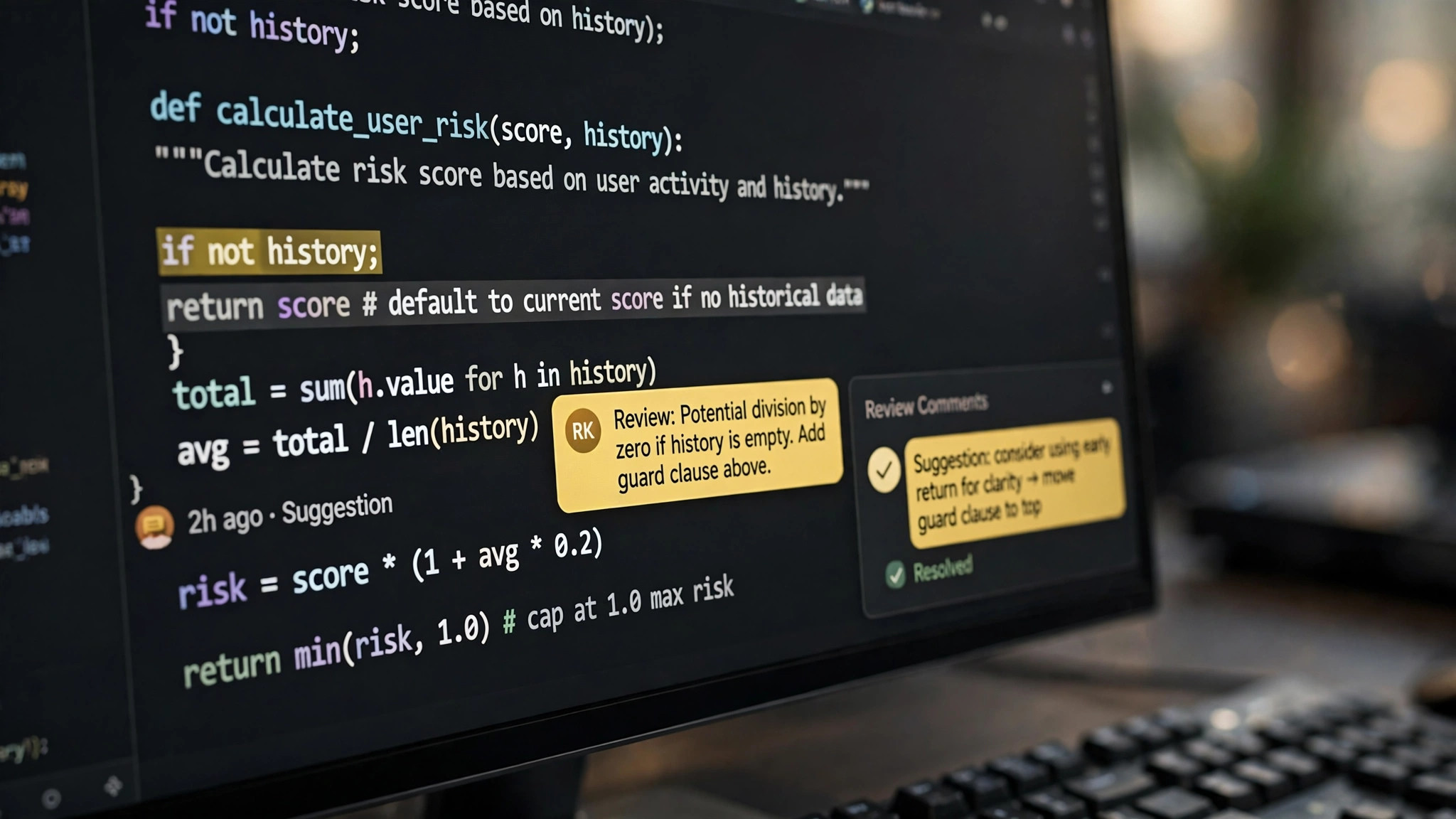
For individual developers, there is a new /ship command in Claude Code. When a change is ready, run /ship: Claude pushes it, opens the PR, reviews the change, and works on feedback and failing checks to help get it ready to merge. It then watches the PR from your session for up to seven days, working on failing checks, merge conflicts, reviewer comments, and its own findings, and pushing fixes. What can actually merge still depends on the developer’s permissions and the repository’s branch rules — Claude Code blocks it from merging or approving on its own in this mode. The command is rolling out in Claude Code and the desktop app starting November 23, and the command guide calls for Claude Code 2.1.330 or later, GitHub CLI 2.63 or later, and Git 2.38 or later for local merges during the watch.
For admins and engineering leaders, Ship can be turned on for an entire repository, and it then works across the team’s pull requests automatically — no /ship invocation needed. Repository-wide Claude Ship is for Claude Team and Enterprise organizations, and for GitHub repositories only. No other git hosting is supported yet.
Anthropic’s own rollout advice is worth following: start with one repository, pick a review level and schedule, set a monthly spend limit, and run the approval policy in observe-only mode until the team trusts it. The company recommends most customers initially run the agent in observation-only mode before letting its approval count toward a merge.
Does it actually work? Anthropic’s own numbers
Anthropic’s own team is the first data point, and it is worth quoting carefully: on the Claude Code team, where Claude’s review is one layer of a broader process, merged pull requests more than doubled from June to September, while the share of PRs reverted fell by more than 40%. That is Anthropic’s own team, on its own process — not an independent benchmark — but it is the reason the company is confident enough to ship approvals, not just reviews.
The pitch is blunt: on the Claude Code team, Claude already writes most of the code. The bottleneck moved downstream, to everything that happens after the PR opens. A product manager on the team can now read customer feedback, talk through ideas with Claude, have it open a PR, and move on while Claude Ship takes it through review, fixes, and an approval decision.
Analysts are more measured. IDC’s Deepika Giri noted that GitHub and GitLab have an advantage in how closely their AI tools integrate with their respective development platforms, while Gartner’s Nitish Tyagi called Claude Ship “not a breakthrough innovation as much as an evolution of existing AI-assisted code review capabilities.” Fair — but the approval step, under a team-written policy, is the part no incumbent has shipped quite this way.

Availability, pricing, and the fine print
Claude Ship is available on Claude Team and Enterprise plans, for repositories on GitHub. Code Review is generally available; PR Steward and Claude Approvals are in public beta. Ship usage is billed on tokens, so turning it on can add to an organization’s costs. Eligible Enterprise customers can claim at least $10,000 in promotional Claude Ship credits — claim by January 15, 2027.
There are also hard exclusions: Claude Ship is not available to organizations with Zero Data Retention, the HIPAA configuration, or customer-managed encryption keys. And GitHub branch rules still determine whether a pull request can merge — Ship works inside those rules, it does not override them.
Anthropic’s week has been a busy one for a company that only started trading publicly on November 19. Our Anthropic stock coverage tracked the 8.5% slide in its first week, and the GPT-6.2 launch shows OpenAI is shipping at the same pace. With OpenAI Dots pushing AI agents into background work, the race is no longer about who writes code fastest — it is about who owns everything after the code is written.
Frequently asked questions
What is Claude Ship?
Can Claude Ship approve my pull request on its own?
How do I start using Claude Ship?
How much does Claude Ship cost?
Who can’t use Claude Ship?
Claude Ship is the clearest sign yet of where Anthropic thinks the AI coding race goes next: not better code generation, but owning the whole loop after the code is written. If the approval policy model earns teams’ trust — and the observe-only mode is there precisely to build it — the pull request stops being a queue and starts being a pipeline. If it does not, the debate about letting an AI approve code will be the story of 2027.
Sources: Anthropic Claude Ship announcement (November 23, 2026); InfoWorld; APIDog; DEV Community coverage.
External links: InfoWorld: Anthropic launches Claude Ship | APIDog: What is Claude Ship?




Pingback: Claude Desktop Apps: Turn Your Ideas Into Real Desktop Apps — No Coding
Pingback: Claude Rust Migration: Anthropic's API Rewrite Cuts CPU 70%